Our mosque or church amp only has a USB port — how do we play daily Quran recitations or service audio reliably?
Sharing a phone over Bluetooth means the recitation stops when someone walks out or gets a call. If your old amplifier plays MP3s from a USB stick, it can stream daily audio on its own.
In plenty of mosques, small churches, and home prayer rooms, the amplifier and powered speakers in the corner have been doing their job for years, and they usually have a USB port on the front for a flash drive. When it is time for daily Quran recitations, the call to prayer, or hymns before a service, relying on whoever is in the room to connect a phone over Bluetooth causes the same headaches week after week: the person holding the phone steps out into the hallway and the recitation cuts off mid-verse, or a phone call and a loud message chime blast through the hall right in the middle of a quiet prayer.
As long as that USB socket on the amp can still read a stick, you do not need a phone babysitting the audio. Grab an ordinary `FAT32` USB stick with an MP3 track on it and plug it into the amp. If the hall speakers play it, the path from the port into the amplifier works fine. If you hear nothing, press the `MODE` or input button on the front panel to make sure it is not sitting on `AUX` line-in. Unless that socket is wired strictly for charging a phone, your existing amp has everything it needs.
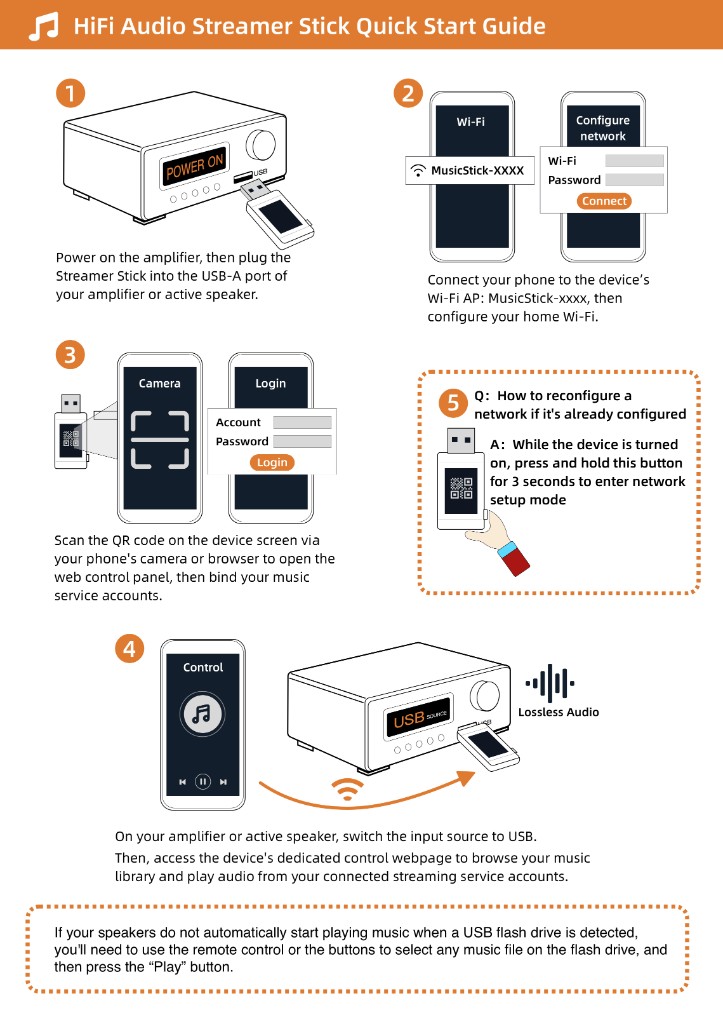
Plug the Raywav Stick into that USB port; it runs off the amp's power and connects to the building's `2.4 GHz` Wi-Fi. The person looking after the hall just scans the QR code on the stick with a phone, picks the day's recitation or station in the browser, closes the page, and puts the phone away. Nobody has to install an app on a shared phone, and anyone can leave the room without cutting the sound.
When you pick your streams, open internet radio to find a trusted Quran station or Christian broadcast, click through to the station's own page to confirm the reciter you know, and write down one main station plus one backup on a card taped next to the amp. Older halls often have thick stone or brick walls, so walk out into the middle of the prayer room when you test the Wi-Fi instead of just checking from the office next door. If the stream ever hiccups, moving the router or the stick out from behind a cabinet fixes it without spending money on new speakers.